
Flaming Gorge Reservoir Through the Decades and Why Dutch John Resort Became the Gateway to Its Hidden History
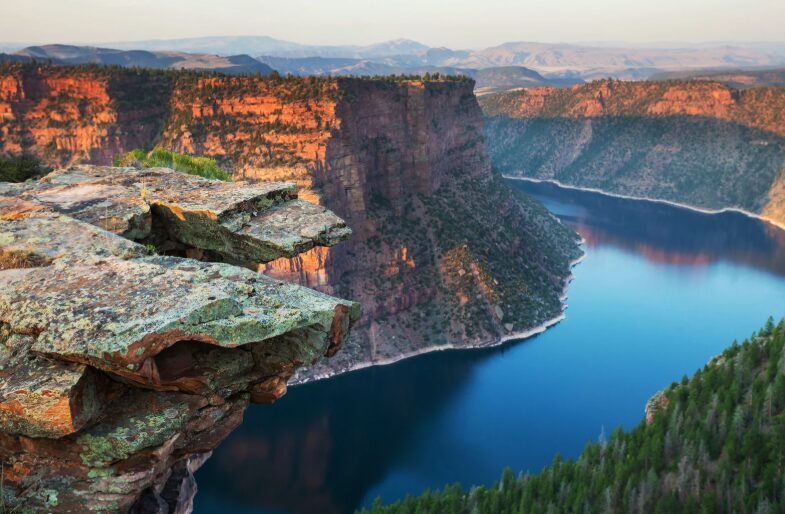
The Flaming Gorge Reservoir stands as one of the most dramatic transformations in American water history. Stretching 91 miles across the Utah-Wyoming border, this massive body of water covers 42,020 acres and holds stories that span from John Wesley Powell’s 1869 expedition to modern conservation efforts. At the heart of this history sits Dutch John Resort, a community born from the dam’s construction that has evolved into the premier gateway for exploring the reservoir’s hidden past.
The Birth of Flaming Gorge Dam and Dutch John
When President Dwight D. Eisenhower pressed a button on his desk in March 1958, setting off the first blast in Red Canyon, he initiated one of the most ambitious engineering projects in the American West. The Flaming Gorge Dam, part of the Colorado River Storage Project, would take six years to complete and forever change the Green River landscape.
Dutch John itself was constructed by the Bureau of Reclamation as a company town to house the more than 3,000 workers building the dam. What began as temporary housing at 6,324 feet above sea level became a permanent mountain community—the literal gateway to Flaming Gorge National Recreation Area, located just 3 miles from the dam.
The town’s namesake, John Honselena, was a German immigrant who raised horses and maintained a summer camp near Summit Springs Guard Station in the late 1800s. His German accent earned him the nickname “Dutch John,” and the area where he ranged his horses—Dutch John Flat—became the foundation for today’s community.
The Colorado River Storage Project: Engineering Meets Environment
The Flaming Gorge Dam emerged from the 1922 Colorado River Compact, which divided water rights among seven states in the Colorado River Basin. The upper basin states—Wyoming, Colorado, Utah, and New Mexico—needed water storage capacity to meet their commitments to lower basin states like Arizona, Nevada, and California during dry years.
Construction began in earnest in 1958 when workers completed the diversion tunnel in August 1959, channeling the Green River around the construction site. By November 1962, the 502-foot-high concrete thin-arch dam was topped out. The first hydroelectric generator went operational on September 27, 1963, when President John F. Kennedy pressed a switch, and Lady Bird Johnson officially dedicated the dam in August 1964.
The reservoir first reached its maximum elevation of 6,040 feet in August 1974, creating a lake with 3,788,700 acre-feet of water storage capacity—roughly twice the annual flow of the upper Green River.
The Echo Park Compromise
The Flaming Gorge Reservoir exists partly because of one of environmentalism’s early victories. The Bureau of Reclamation originally proposed Echo Park Dam at the confluence of the Green and Yampa Rivers within Dinosaur National Monument. The Sierra Club, led by David Brower, successfully fought the proposal, but the compromise meant a dam would still be built 50 miles upstream near the brilliant red-rock canyon that John Wesley Powell named “Flaming Gorge” in 1869.
Ironically, the dam doesn’t actually sit in Flaming Gorge—that canyon lies buried under water almost 20 miles upstream. The dam was built in Red Canyon, the narrowest and deepest of four gorges in the area, making it the ideal construction site.
From Construction Camp to Recreation Hub
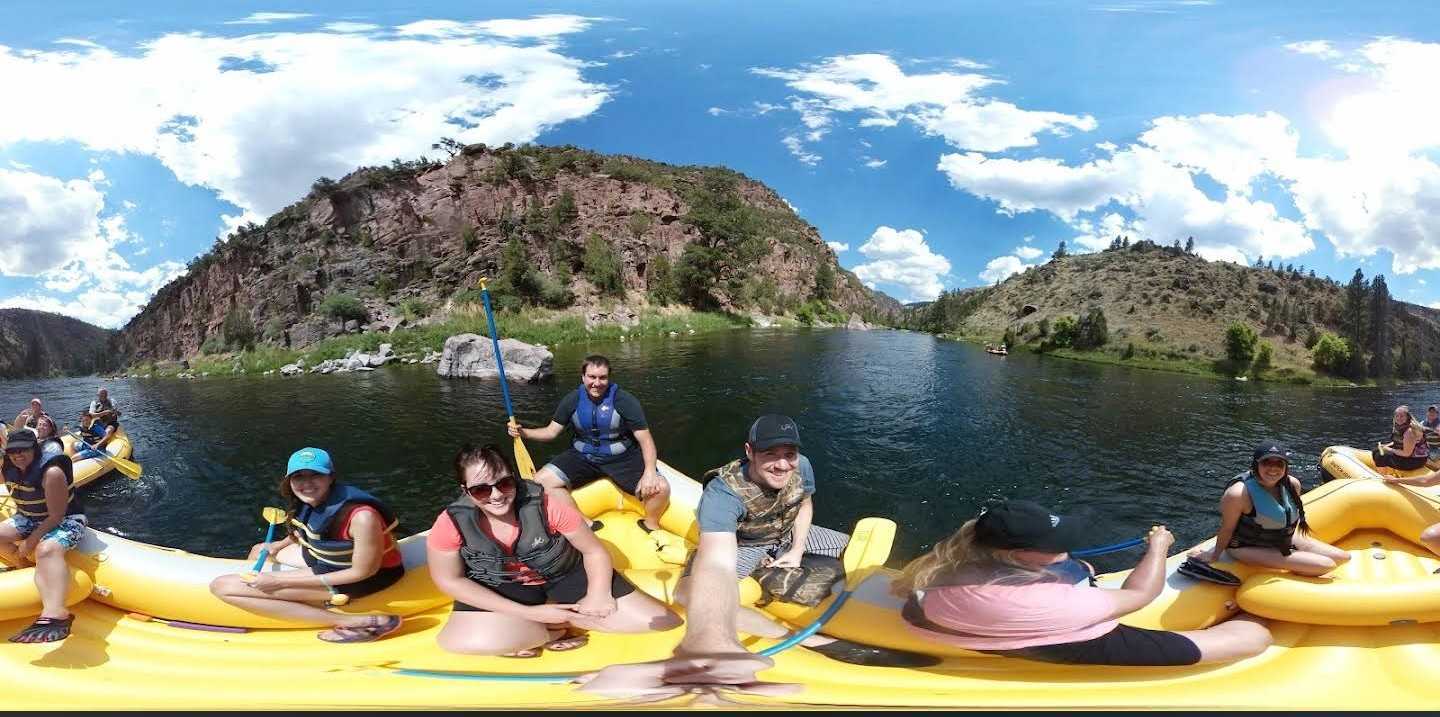
As construction wrapped up in 1964, Dutch John transitioned from a bustling worker camp to an administrative site managed by Daggett County. The community’s population fluctuates from nearly 250 in summer to about 150 during winter months, reflecting its role as a seasonal recreation hub. For a fun outdoor adventure, try our rafting tours led by experienced river guides.
Dutch John Resort capitalized on this transformation, evolving from basic worker housing into a full-service resort offering luxury cabins, RV sites, and campgrounds. The resort’s location—just minutes from the dam and at the entrance to Flaming Gorge National Recreation Area—made it the natural base camp for visitors exploring the reservoir’s 91-mile expanse.
The Ecological Transformation: Cold Water Creates World-Class Fishing
The Flaming Gorge Dam fundamentally altered the Green River’s ecology. Water released from deep in the reservoir runs cold and clear—a stark contrast to the naturally warm, silty flow that once characterized the river. This transformation has had mixed environmental impacts.
Native fish species like the razorback sucker, Colorado pikeminnow, humpback chub, and bonytail chub have struggled in the changed conditions. The Bureau of Reclamation modified release patterns in 1992 and again in 2006 to mimic natural seasonal flows and protect these endangered species, maintaining minimum flows above 800 cubic feet per second.
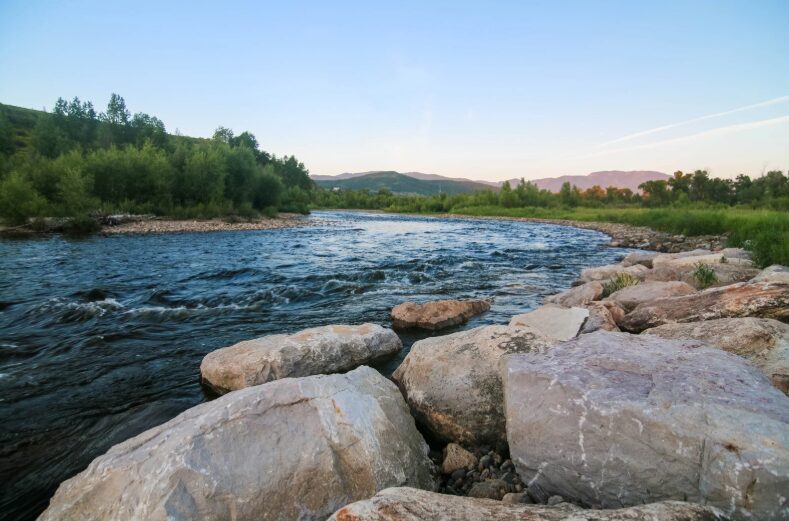
However, the cold water created an unexpected benefit: approximately 28 miles of the Green River below the dam became a Blue Ribbon Trout Fishery. Rainbow trout, brown trout, lake trout, and kokanee salmon now thrive in the gin-clear waters, attracting anglers from around the world. The reservoir itself has become nationally renowned for growing large trout in its cool, clear water.
Dutch John Resort recognized this opportunity early, developing guided fishing services that put guests directly on the water in areas like Little Hole, where trophy fish feed in spring hatches. The resort’s proximity to both the reservoir and the tailwater fishery below Flaming Gorge Dam makes it the ideal base for serious anglers.
Diverse Fish Species in Flaming Gorge Waters
Today’s Flaming Gorge ecosystem supports Colorado River cutthroat trout, brown trout, rainbow trout, lake trout, kokanee salmon, smallmouth bass, burbot, and common carp. This diversity, combined with the reservoir’s structure and the Green River’s world-class fly fishing conditions, has transformed the area into one of Utah and Wyoming’s greatest fisheries. For a successful fishing trip, consider Green River fishing guides who know the river’s seasonal patterns.
Recreation Through the Seasons
The Flaming Gorge National Recreation Area, operated by Ashley National Forest, offers year-round activities that Dutch John Resort guests can access within minutes. Summer brings boating, water skiing, swimming, fishing, hiking trails like Canyon Rim Trail, and camping throughout the area. The Forest Service maintains campgrounds along Highway 191, with Dripping Springs near Dutch John remaining open through winter.
Winter transforms the landscape into a playground for cross-country skiing and snowmobiling. Spring brings incredible fishing as trout feed aggressively after the long winter. Night skies offer spectacular stargazing far from city lights, and wildlife viewing opportunities abound throughout the gorge country.
Nearby attractions include the U.S. Forest Service Visitor’s Center at Red Canyon, Red Canyon Lodge, the Swett Ranch, Ute Tower Lookout, Cedar Springs Marina, Buckboard Marina along Highway 530, and the Jarvie Ranch in Brown’s Park. The Bureau of Reclamation offers guided tours of the dam and powerplant during summer months.
The Geology That Made It Possible
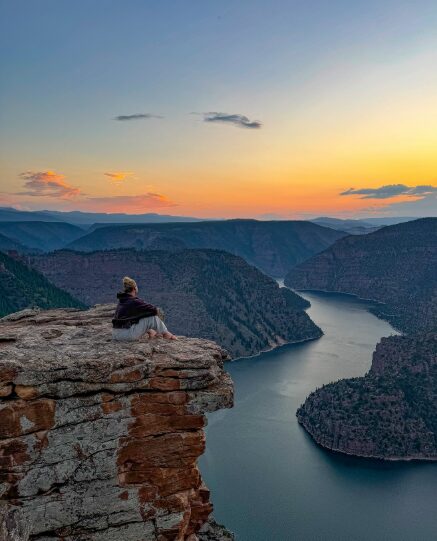
The foundation of Flaming Gorge Reservoir is a steep-sided narrow canyon composed of siliceous sandstone and hard quartzites interbedded with softer shales, siltstones, and argillites. This geological structure, carved by the Green River cutting through the Uinta Mountains, created the perfect natural basin for water storage.
About 1.5 miles east of the dam, a road cut reveals a fault scarp with approximately 9 feet of slippage—a reminder of the powerful geological forces that shaped this landscape over millions of years. The brilliant red rocks that gave Flaming Gorge its name glow when sunlight hits them, just as they did when Powell first saw them in 1869.
Modern Challenges and Water Storage Debates
The Colorado River system faces unprecedented stress from drought and growing demand. Proposals for a 501-mile pipeline from Flaming Gorge Reservoir to eastern Colorado have sparked heated debates over water rights, with 87 percent of Wyoming residents opposing the project. Both the Federal Energy Regulatory Commission and U.S. Army Corps of Engineers have denied construction permits.
The dam’s three 50,650-kilowatt generators continue providing hydroelectric power to the region, with the Western Area Power Administration marketing the electricity. The powerplant was uprated from its original 108,000-kilowatt capacity between 1990 and 1992, bringing total generating capacity to 151,950 kilowatts.
Why Dutch John Resort Remains the Gateway
Dutch John Resort’s unique position in history—literally built to support the dam’s construction—has evolved into its greatest asset. The resort offers modern luxury cabins accommodating 6-14 guests, pet-friendly accommodations, RV sites with full hookups, and a 6,000-foot paved airport landing strip for fly-in visitors. We also offer cabin rentals at Dutch John Resort for guests looking for a comfortable and convenient place to stay near the Green River.
Guests at the gorge resort enjoy immediate access to the reservoir’s northern reaches, the Green River tailwater fishery, Red Canyon’s dramatic vistas, and the vast recreational opportunities within Flaming Gorge National Recreation Area. The resort’s location near Rock Springs, Wyoming (14 miles) and Vernal, Utah (40 miles) provides convenient access while maintaining the remote mountain atmosphere that makes Flaming Gorge special.
From February ice fishing to March spring runoff, summer boating on the lake, and autumn wildlife viewing, Dutch John Resort provides year-round access to a landscape transformed by one of America’s great engineering achievements. The resort staff’s local knowledge—passed down through decades of guiding visitors—offers insights into hidden canyons, productive fishing holes, and historical sites that most visitors never discover.
Exploring the Hidden History
The story of Flaming Gorge Reservoir is written in layers: Powell’s 1869 expedition through Lodore Canyon, Dutch John Honselena’s 19th-century horse ranch, the massive construction project that employed thousands, the environmental debates that shaped modern conservation, and the ongoing evolution of a landscape where water, rock, and human ambition intersect.
Dutch John Resort stands at the center of this narrative, offering visitors not just a place to stay, but a connection to the hidden history beneath the water’s surface. Where four distinct gorges once echoed with rapids, a vast lake now stretches toward the Rocky Mountain horizon. And at the gateway to it all, the community born from the dam’s construction continues welcoming those who come to explore one of the West’s most remarkable transformations.Visitors enjoy the peaceful atmosphere of our RV park and campgrounds while staying close to adventure spots.
Book your stay at Dutch John Resort and discover why this small mountain community remains the essential base camp for experiencing Flaming Gorge Reservoir’s past, present, and future.
