What Is Fly Fishing? Why the Green River at Dutch John Resort Is Perfect for Beginners
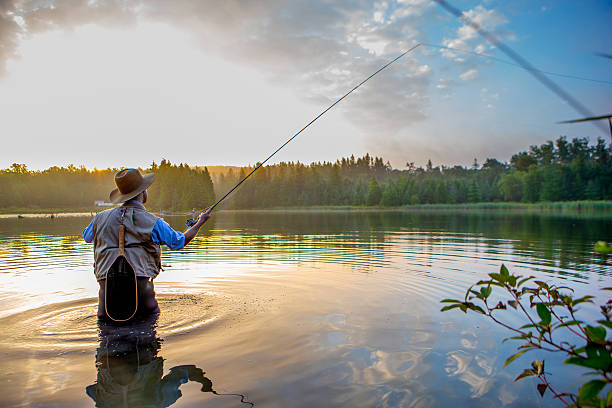
What is fly fishing? At its core, fly fishing is a style of fishing that uses a lightweight artificial fly to imitate natural food drifting on or beneath the water. Instead of relying on heavy bait or sinkers like conventional fishing or regular fishing, fly fishing uses the weight of the fly line to deliver the fly with a controlled casting technique.
For beginners, few places make learning easier—or more rewarding—than the Green River at Dutch John Resort. Below Flaming Gorge Dam, clear water, abundant trout, and consistent conditions create an ideal classroom for new fly anglers.
Fly Fishing Basics: How It’s Different From Traditional Fishing
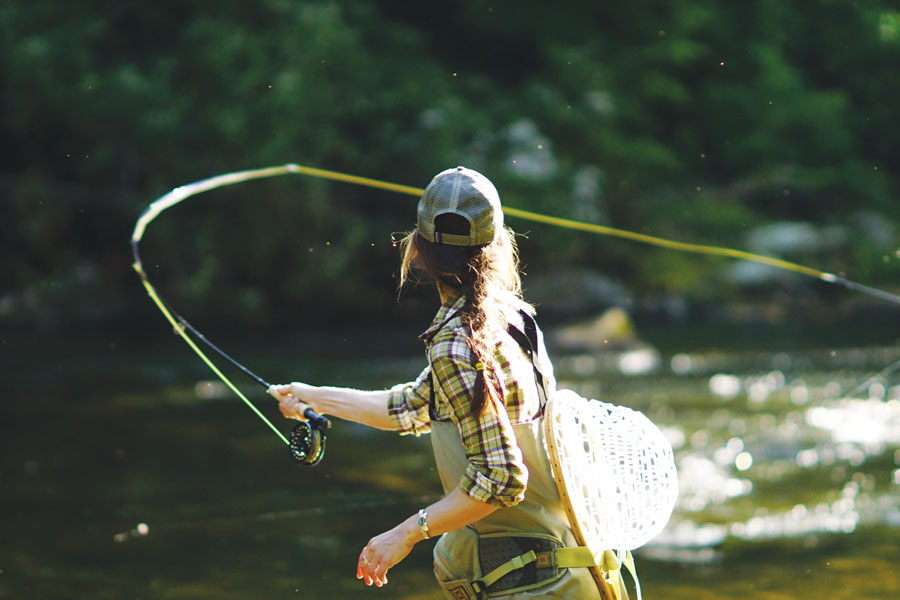
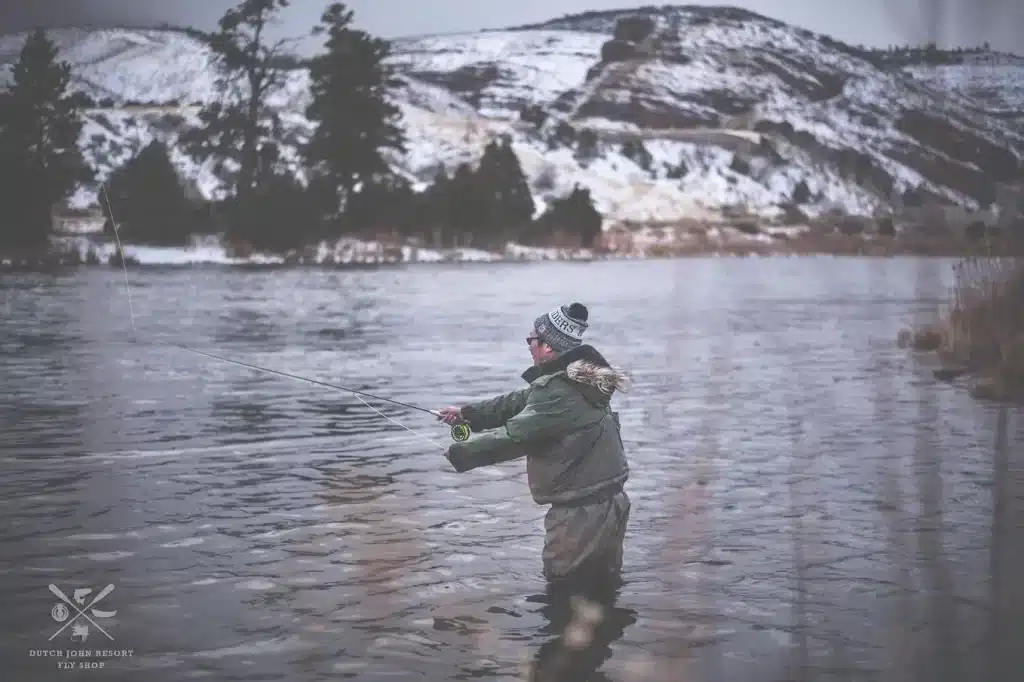
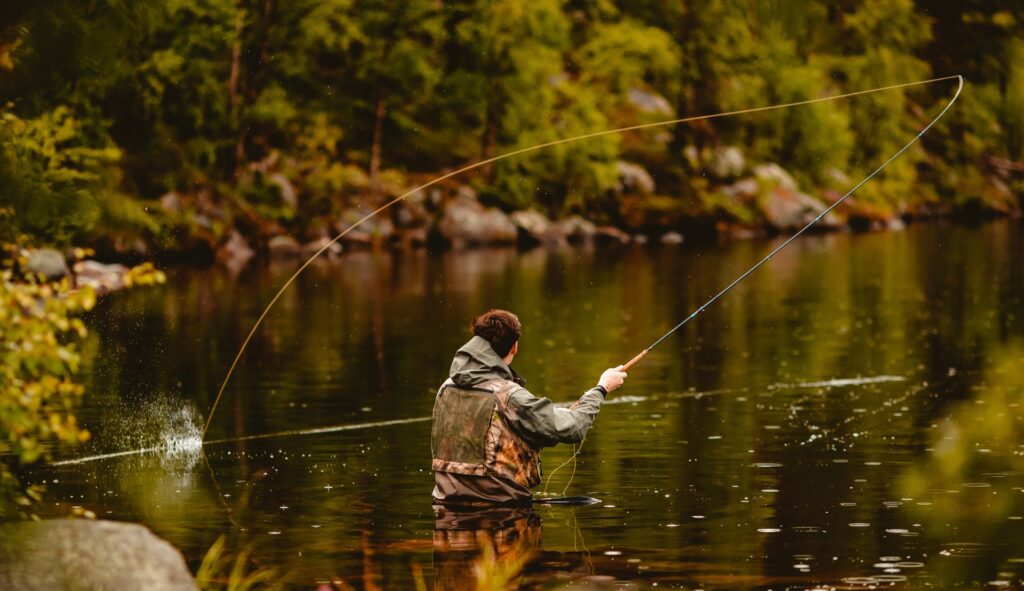
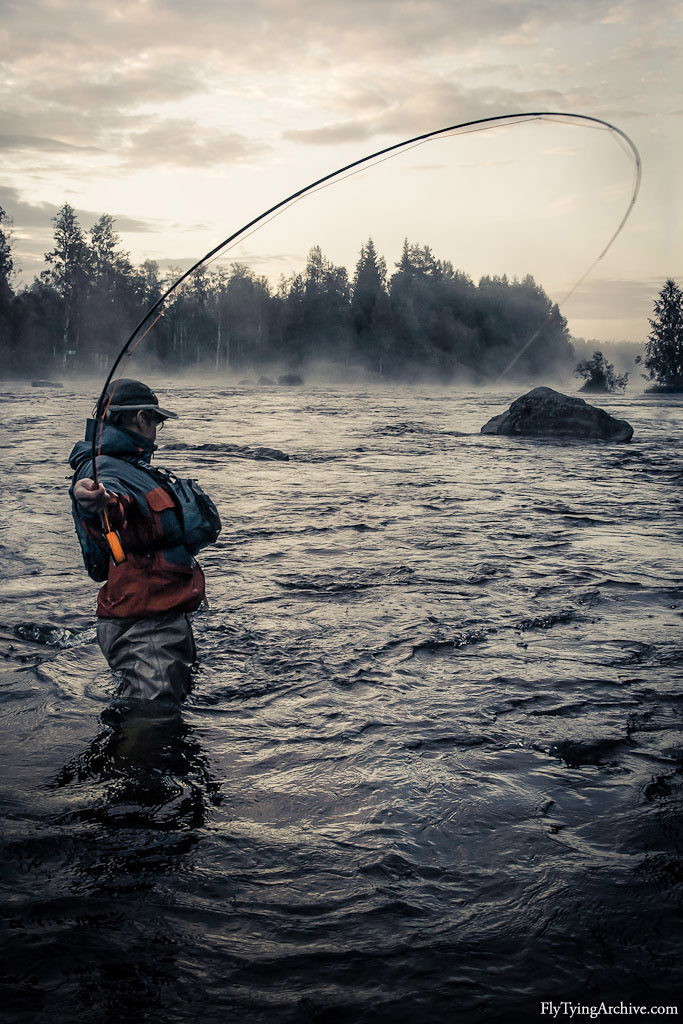
When people ask what is fly fishing, they’re often comparing it to traditional fishing. In fly fishing, the fly rod and fly reel work together to cast a weighted fly fishing line, not the fly itself. The motion of fly casting loads the rod, and the rod tip guides the line forward in a smooth arc.
Key differences include:
- No heavy sinkers or typical bait
- Use of a fly, often imitating aquatic insects or baitfish
- A focus on presentation and drift rather than depth alone
This fishing technique is especially effective on rivers like the Green, where trout feed naturally throughout the water column.
Why the Green River Is Ideal for Beginner Fly Anglers
The Green River below Flaming Gorge Dam offers stable flows, clear water, and a healthy population of wild trout, making it one of the best places in the West to learn fly fishing. Beginners benefit from predictable currents, visible fish, and forgiving conditions that help build confidence while catching fish.
New fly anglers can practice:
- Reading water and spotting fish
- Managing fly line and fishing line
- Learning how trout react to different flies
The river supports multiple fish species, but trout dominate, giving beginners consistent opportunities during every season.
Understanding Flies: From Dry Flies to Streamers
A fly is designed to imitate what fish eat. On the Green River, trout feed on aquatic insects, drifting nymphs, and small forage fish.
Common fly types beginners learn include:
- Dry fly patterns that float on the surface, such as the classic Parachute Adams
- Wet fly and nymph fly patterns fished below the surface
- Streamer fishing with larger flies that imitate small baitfish or baitfish
Choosing the right fly—whether a lightweight artificial fly or a streamer—helps beginners understand how trout respond to different food sources.
Fly Fishing Equipment Made Simple
You don’t need complicated setups to start fly fishing. At Dutch John Resort, guided trips introduce beginners to essential fly fishing equipment without overwhelming them.
Typical fly fishing gear includes:
- A balanced fly rod and fly reel
- Quality fly fishing line
- A simple fly pattern selection
- Proper fishing equipment sized for trout
This setup allows beginners to focus on technique, not gear confusion.
Learning Faster With a Guide at Dutch John Resort
A local guide shortens the learning curve dramatically. Instead of guessing, beginners learn how to position casts, control the drift, and adjust retrieves based on fish behavior. Guides explain how fly fishing differs from conventional fishing and even from saltwater fly fishing, which uses different tactics and flies.
With expert instruction, beginners quickly progress from targeting small fish to confidently hooking larger fish, all while gaining skills they’ll use anywhere they fish.
So, What Is Fly Fishing—and Why Start Here?
What is fly fishing? It’s a hands-on, immersive way to connect with fish, water, and movement—one that rewards patience and understanding. On the Green River, beginners find ideal conditions to learn the craft in a setting known for world-class trout fishing.