
River Rafting Safety Guide: How to Stay Safe on Class I–V Rapids

River rafting is one of the most rewarding outdoor experiences you can have—but it’s also an activity where preparation and knowledge matter. Whether you’re planning a calm scenic float or a high-adrenaline whitewater rafting adventure, understanding how to safely navigate different classes of rapids is essential.
From the calm stretches of the Green River to intense whitewater on the Gauley River in West Virginia, every river trip presents unique challenges. This guide breaks down everything you need to know to stay safe on Class I–V rapids, whether you’re a beginner or one of many experienced rafters looking to refine your skills.
Understanding River Rafting Class Levels (Class I–V Rapids)
Every rafting trip begins with understanding how rapids are classified. These classes determine the level of difficulty and risk.
Class I–II: Beginner-Friendly Rivers
These are ideal for first-time rafters or families:
- Calm flow with small waves
- Minimal obstacles
- Perfect for a relaxed scenic float
Rivers like the American River, Snake River, or sections of the Colorado River often feature beginner-friendly stretches. These trips focus more on scenery and less on technical navigation.
Class III: Intermediate Whitewater
This is where white water rafting becomes more technical:
- Moderate waves and stronger current
- Requires active paddling and coordination
- Some maneuvering around rocks and obstacles
Popular rafting locations include the Klamath River, Trinity River, and parts of the Arkansas River near Royal Gorge.
Class IV–V: Advanced & High Adventure Rapids
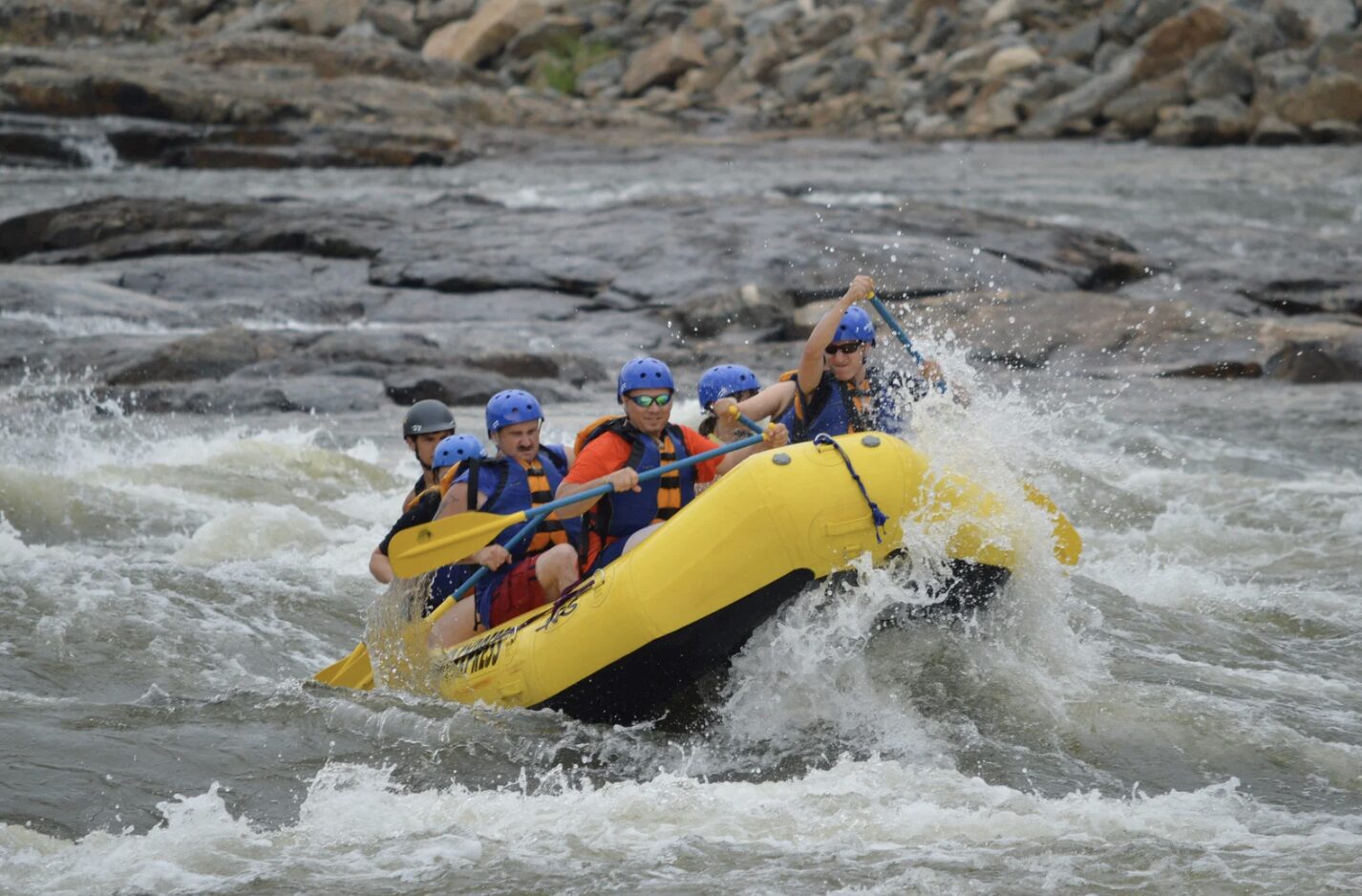
For those seeking serious adventure, these rapids demand skill and experience:
- Powerful currents and large, unpredictable waves
- Technical routes and fast decision-making
- Higher risk of flipping or falling out of the raft
Famous examples include:
- The Upper Gauley River in West Virginia
- Sections of the Tuolumne River and Kern River rafting routes
- Intense runs near Cherry Creek
These are best attempted during a guided whitewater rafting trip, especially during high water conditions.
Essential River Rafting Safety Gear
No matter the trip, proper gear is non-negotiable in river rafting:
- Personal Flotation Device (PFD): Must be worn at all times
- Helmet: Critical for Class III+ whitewater
- Proper Footwear: Secure shoes for traction in and out of the river
- Throw Bag & Rescue Rope: Essential for emergencies
- Dry Bags: Protect gear during your rafting trip
Whether you’re navigating the Rogue River, Salmon River, or preparing for grand canyon rafting, gear is your first line of defense.
How to Read Rapids and River Features
Understanding the flow of a river is key to safe rafting:
- V-shaped currents indicate the safest path
- Avoid large holes and hydraulics that can trap a raft
- Watch for strainers (fallen trees) and rocks
- Identify eddies where you can safely stop
Rivers like the Desolation Canyon stretch of the Green River or the technical sections of the Merced River require strong awareness of natural features.
Safety Tips for Any Rafting Trip
No matter where your adventure takes you—from the New River Gorge to the Grand Canyon—these principles apply:
1. Always Go with a Guide if You’re New
A guided whitewater rafting trip ensures you have professionals navigating complex rapids.
2. Check Conditions Before You Go
Water levels dramatically impact safety. Learn more about current conditions here:
👉 Rafting & Whitewater Conditions — Green River Below Dutch John
3. Understand the Risks
Every river rafting experience carries risk. Educate yourself before your trip:
👉 Is Rafting Dangerous? What to Know Before You Float the Green River Near Dutch John
4. Choose the Right Equipment
Not all rafts are created equal—especially for green river rafting:
👉 Why Our Raft Boats Are Purpose-Built for the Green River Below Flaming Gorge
Top Rivers for Safe and Scenic Rafting
If you’re planning your next river rafting experience, consider these destinations:
- New River in West Virginia – iconic whitewater rafting with access to New River Gorge
- Rogue River rafting trips – known for scenic beauty and access to the Rogue River Trail
- Colorado River through the Grand Canyon – bucket-list adventure
- Green River rafting routes – ideal balance of scenery and manageable rapids
- Lake Powell sections for calmer water-based recreation
Each river offers a different type of adventure, from peaceful floats to intense high adventure runs.
Advanced Safety Considerations
For those planning a more technical raft trip, keep these in mind:
- Monitor weather and water flow changes
- Avoid solo trips on difficult rapids
- Practice self-rescue techniques
- Communicate clearly with your group
- Know when to portage (walk around dangerous sections)
Even experienced rafters respect the unpredictability of whitewater environments.
Final Thoughts: Make Safety Part of the Adventure
A successful river rafting experience isn’t just about conquering rapids—it’s about preparation, awareness, and making smart decisions. Whether you’re planning a relaxing scenic river outing or an intense white water rafting trip, safety should always come first.
From the rugged terrain of the Kern River to the iconic flows of the Snake River, every trip offers something unique. With the right knowledge, gear, and mindset, your next rafting adventure can be both thrilling and safe.
Ready to plan your next river trip? Start with the right preparation—and let the river take you the rest of the way.
